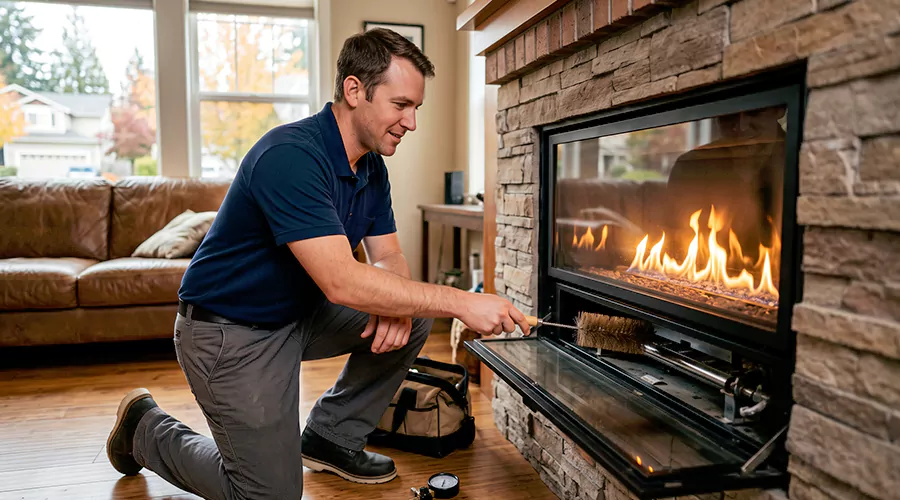
How to Clean a Gas Fireplace Safely
Cleaning a gas fireplace requires turning off the gas, letting it cool, and using approved cleaners. Learn how to clean glass, logs, and burners without damage.




Based on 500+ Reviews

Proudly American
Owned & Operated

A gas fireplace requires regular cleaning to maintain its appearance, improve performance, and help ensure safe operation. Although gas fireplaces produce less buildup than wood-burning fireplaces, dust, dirt, soot, and debris can still collect on components over time.
Cleaning a gas fireplace safely requires turning off the gas supply, allowing components to cool, and following proper procedures to avoid damaging sensitive parts. Incorrect cleaning methods can affect flame performance or damage fireplace components.
Understanding the correct cleaning process can help homeowners maintain their gas fireplace and identify potential issues before they become larger problems.
Regular cleaning helps keep a gas fireplace operating properly.
Cleaning can help:
A clean fireplace also makes it easier to notice problems such as:
The cleaning schedule depends on:
Many gas fireplaces benefit from regular cleaning and inspection as part of routine maintenance.
Additional cleaning may be needed if you notice:
Before cleaning, follow important safety steps.
Make sure the fireplace is completely turned off.
Do not begin cleaning while:
Gas fireplace components can remain hot after operation.
Wait until:
Cleaning hot components can cause burns or damage.
For deeper cleaning, shutting off the gas supply may be recommended. Locate the gas shutoff valve and follow manufacturer instructions.
Different gas fireplaces have different designs.
Before cleaning, check:
Common cleaning supplies include:
Avoid using:
Switch off the fireplace and allow all parts to cool.
Confirm that:
Many gas fireplaces have removable glass panels.
Before removing glass:
Never force the glass panel because it may crack.
Gas fireplace glass can collect:
Use a cleaner specifically designed for fireplace glass.
Avoid:
These may damage the glass surface.
Gas logs are designed to remain in specific positions.
Before removing or moving logs:
Clean logs gently using:
Avoid:
Improper log placement can affect flame performance.
Dust and debris can collect around burners.
Carefully remove:
Use:
Do not block burner openings or adjust burner components.
After cleaning and restarting the fireplace, observe the flame.
A normal flame should generally be:
Watch for:
These may indicate a problem requiring service.
Gas fireplace glass requires special care.
Follow these tips:
Improperly installed glass can affect fireplace operation.
Some components should not be adjusted or cleaned without proper knowledge.
Avoid:
These parts affect safe combustion and operation.
Yes, a vacuum can be used carefully to remove loose dust and debris.
Use:
Avoid vacuuming aggressively around:
Soot on a gas fireplace may indicate more than just dirt.
Possible causes include:
If soot appears:
Recurring soot should not be ignored.
Avoid these common mistakes:
This can cause burns or damage.
Household cleaners may damage fireplace glass.
Incorrect placement can affect combustion.
Strong cleaners can damage surfaces and components.
Gas settings should only be handled by qualified professionals.
Professional service may be needed when you notice:
Cleaning may remove surface buildup, but it will not fix mechanical or safety issues.
Helpful maintenance steps include:
Regular care helps keep the fireplace operating efficiently.
Cleaning a gas fireplace safely involves turning off the unit, allowing it to cool, carefully cleaning the glass, removing dust from components, and avoiding adjustments to gas-related parts. Regular cleaning helps maintain appearance, improve performance, and identify potential problems early. However, issues such as gas odors, soot buildup, abnormal flames, and ignition problems require professional inspection.
Proper maintenance and safe cleaning practices help keep a gas fireplace operating reliably and efficiently.
Yes, homeowners can clean exterior surfaces, glass, and remove dust carefully, but gas components should not be adjusted.
Cleaning frequency depends on usage and buildup, but regular maintenance helps keep the fireplace operating properly.
Use a cleaner specifically designed for gas fireplace glass and avoid regular household glass cleaners.
Soot may indicate dirty components, poor combustion, incorrect flame patterns, or ventilation issues.
Yes, a soft vacuum attachment can remove loose dust and debris when used carefully.
Yes, but logs should be cleaned gently and kept in their original position according to manufacturer instructions.
Cleaning a gas fireplace requires turning off the gas, letting it cool, and using approved cleaners. Learn how to clean glass, logs, and burners without damage.
